 134.2kHz
 A520-M
Handheld 134.2kHz FDX-B Microchip Reader, USB / 2.4G / Bluetooth
- USB
- Wireless
- Handheld
Read range: > 8 cm
Application
Read FDX-B and EMID electronic ID (EID) ear tags on cattle and sheep at the chute, the race, the feeder or the weigh scale. Choose an EID handheld with memory, a fixed EID panel reader with RS232/RS485 output for feedlots and weighing points, a USB desktop reader or a phone plug-in.
EID tag
Each animal carries an ISO 11784/11785 FDX-B electronic ID (EID) ear tag, or an EMID tag. The reader reads the tag's ID number; it does not write tags.
Reader
An EID handheld reads cattle or sheep at the chute, in the pen or at the sale yard. A fixed EID panel reader reads each animal as it passes a race, a feeder or a weigh scale.
Data link
Handhelds send IDs live or in batches over USB, 2.4G or Bluetooth. The panel outputs over RS232 or RS485 to a feeder or weigh-scale controller, a PLC or a PC.
Records
Herd-management, feedlot, weighing or drafting software matches the EID number to the animal's record and logs treatments, weights and movements.
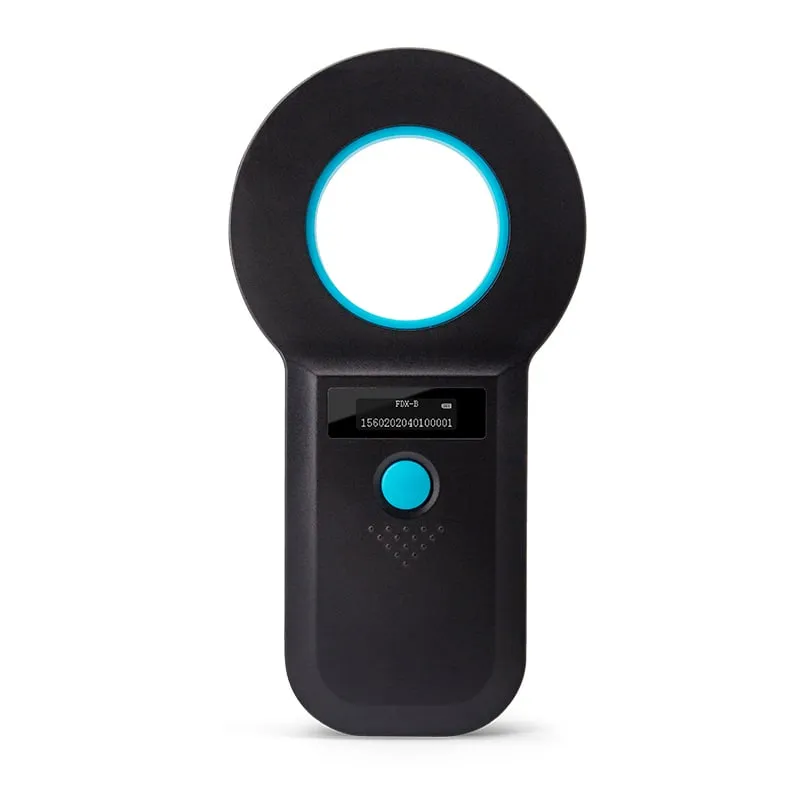
134.2kHz A520-M
Read range: > 8 cm
Ring-antenna EID handheld with an OLED screen and 128-record memory for cattle and sheep work at the chute or in the pen; sends IDs over USB, 2.4G or Bluetooth and reads 30 mm ear tags at more than 20 cm.
 134.2kHz
 A540-M
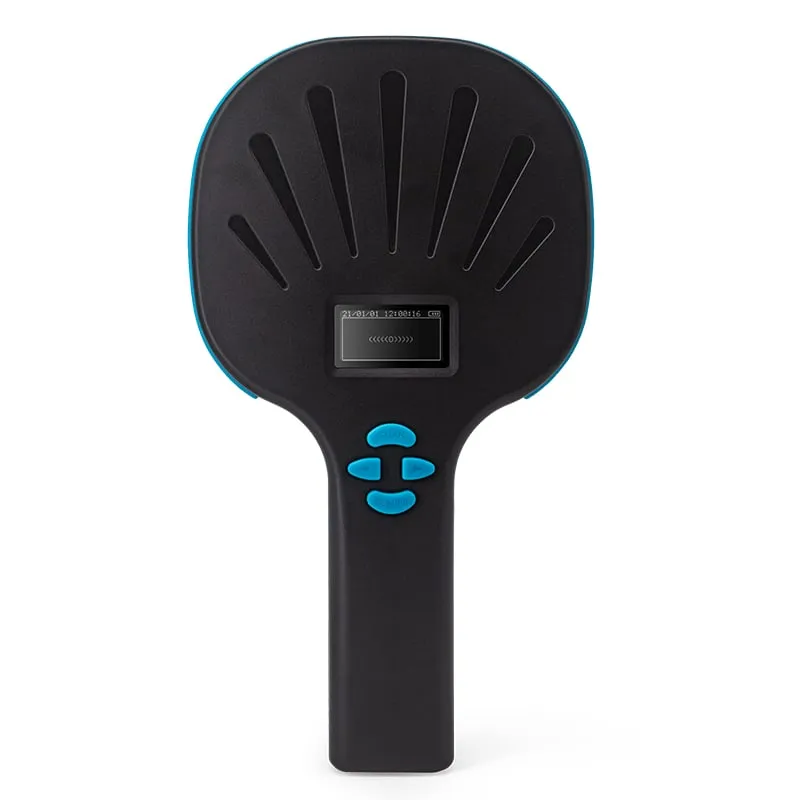
Read range: > 15 cm
Paddle EID handheld with a 1D/2D barcode imager and 6,000-record memory, for teams that scan ear tags and barcoded medicine or feed labels; reads 30 mm ear tags at more than 25 cm.
 134.2kHz
 A660-M
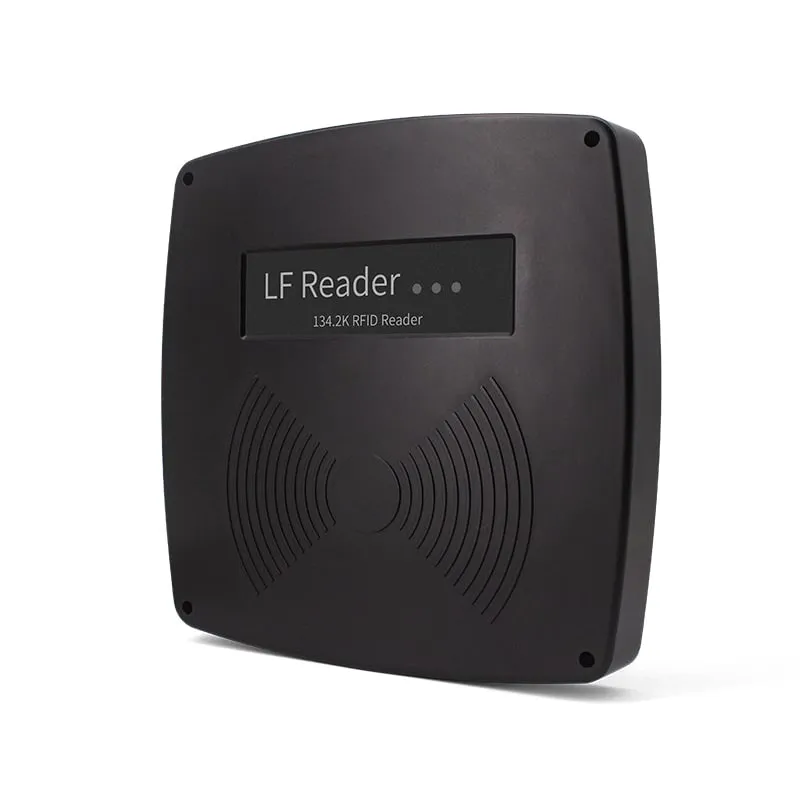
Read range: 40 cm ± 5 cm
Fixed EID panel reader, 260 × 260 mm and resin-potted, with a 40 cm ± 5 cm read range and RS232/RS485 output, for races, feeders and weigh scales wired to a controller.
 134.2kHz
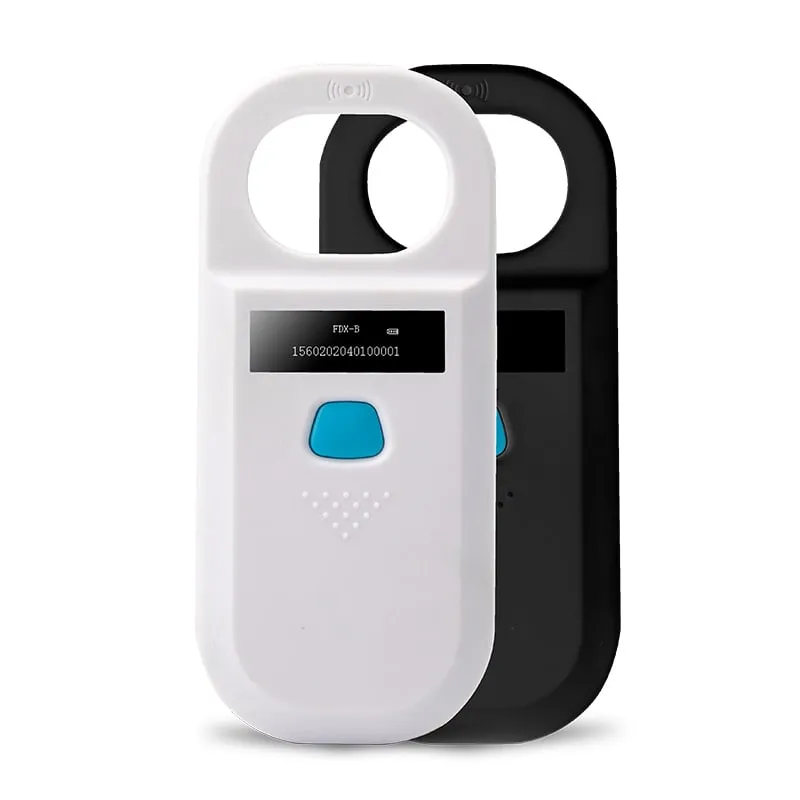
 Entry-level USB EID handheld with an OLED screen and 128-record memory, for smaller cattle and sheep farms that upload records at the office rather than live.
 134.2kHz
 USB desktop reader that types the ear tag number into any program with no driver, for tagging stations, farm offices and veterinary desks; 0–150 mm range.
 134.2kHz
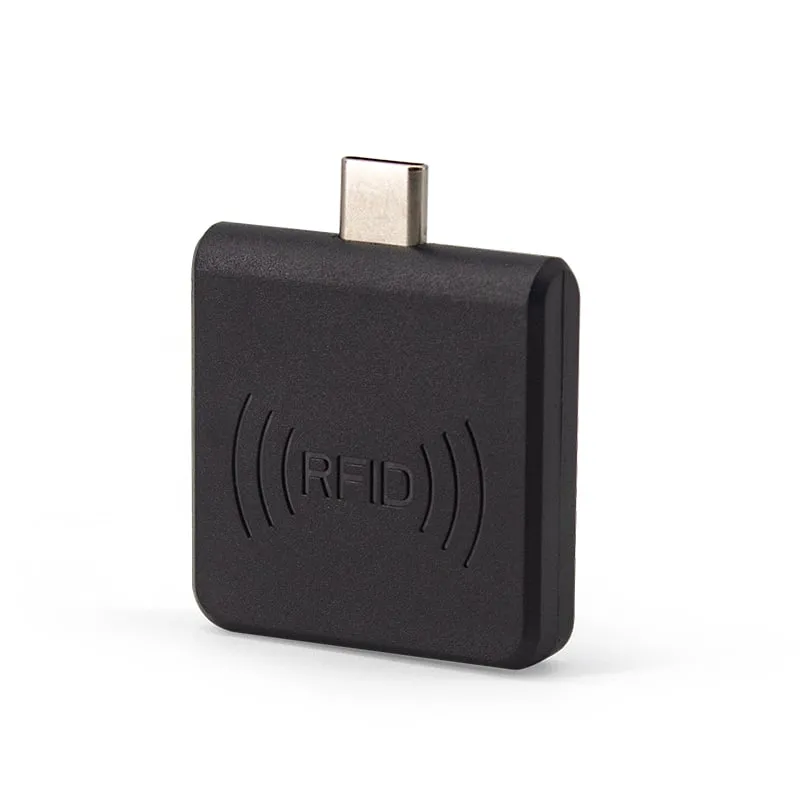
 35 × 35 × 7 mm USB-C plug-in that lets field staff read EID tags with an Android phone that supports OTG; types the tag number into any app and reads at 0–30 mm.
Printed visual ear-tag numbers get dirty, faded or torn, and reading one means getting close to the animal. Writing numbers down at the chute (crush) or the race and typing them in later doubles the work and adds errors. With a mob of sheep moving through a race, reading every tag by eye is rarely practical at all.
Electronic identification (EID) fixes the first step: a correct ID number goes straight into a record. Treatments, weights, movements and ownership can then be traced back to the right animal.
The need is the same on cattle and sheep farms, in feedlots and sale yards, at weighing points, and in veterinary practices and research facilities. It is also the same for the vendors who serve them: feeder, weigh-scale, drafting and herd-software suppliers who need an EID reader that fits into their own system.
Livestock EID tags follow two standards. ISO 11784 defines the structure of the ID number, and ISO 11785 defines how the tag and reader communicate. Our 134.2kHz FDX-B RFID readers read:
An ear tag has a larger coil than a 2–12 mm glass-tube microchip and reads further, which is why the range figures below are given for both. The readers read the tag’s ID number only; they do not write tags. HDX and FDX-A tags are not in their specification, and some cattle and sheep EID programs use HDX, so confirm your tag type first. FDX-B vs HDX animal tags explains the difference.
An ISO 11784 ID is usually written as a 15-digit number: a 3-digit code, which is either an ISO 3166 numeric country code or a manufacturer code in the 900–998 range, followed by a 12-digit national identification number. How the 15-digit animal ID is built walks through an example.
Start with where the animal is when you read it, then decide how the number has to reach your software.
| Reading point | Reader | Read range (tag dependent) | Data path |
|---|---|---|---|
| Chute, pen or paddock, cattle or sheep, with live data to a phone or PC | A520-M Bluetooth EID ear tag reader, ring handheld | Glass tube > 8 cm; 30 mm ear tag > 20 cm | USB, 2.4G or Bluetooth; 128 records |
| Treatments that also involve barcode labels (medicine, feed, samples) | A540-M EID reader with 1D/2D barcode scanner, paddle handheld | Glass tube > 15 cm; ear tag > 25 cm | USB, optional wireless or Bluetooth; 6,000 records |
| Smaller cattle or sheep farm, upload at the office | A530-U USB EID handheld | Glass tube > 5 cm; ear tag > 15 cm | USB; 128 records |
| Race, feedlot feeder or weigh scale | A660-M EID panel reader, fixed | 40 cm ± 5 cm | RS232 or RS485 (Wiegand 26/34 listed; wiring confirmed in your quotation) |
| Tagging station, farm office or veterinary desk | A110-U USB desktop ear tag reader or A140-U compact USB tag reader | 0–150 mm | USB, number typed at the cursor |
| Field staff with Android phones | A220-C USB-C EID reader for Android | 0–30 mm | USB-C OTG, number typed at the cursor |
The three EID handhelds run on a 3.7 V lithium battery and show the ID on an OLED screen. The paddle-shaped A540-M reads furthest and stores the most records. The A530-U is the simplest, with USB only. The two desktop readers do the same job in different housings: the A110-U is a 104 × 68 × 10 mm slim pad, and the A140-U is a 105 × 65 × 15 mm compact pad.
The readers can be combined: for example, an A660-M EID panel reader at the race, feeder or weigh scale for automatic reads, plus a handheld for checking individual cattle or sheep in the pen.
EID handhelds. Read an animal and the ID appears on the screen. The A520-M sends it live over USB, 2.4G or Bluetooth, or stores it for a batch upload later. Memory is 128 records on the A520-M and A530-U and 6,000 on the A540-M, which also offers key-trigger, read-once and continuous read modes. Live Bluetooth upload suits a tablet or laptop at the chute or scale; batch upload suits paddocks and pastures with no device nearby. No SDK is documented for the handhelds. Tell us which app or program receives the data, and we confirm the upload format in your quotation.
Desktop and phone readers. The A110-U, A140-U and A220-C need no driver or app. They type the tag number wherever the cursor is: a spreadsheet, a web form, herd-management software or a clinic system. The A220-C needs a phone with USB OTG and outputs a 10-digit decimal number by default. If your software needs the full 15-digit ISO number, ask about a custom output format and we confirm it in your quotation. The output format of the A110-U and A140-U is not published, so we confirm it against your software in the same way. See USB-C phone readers, keyboard-emulation readers and can a phone read a pet microchip?
EID panel reader. The A660-M measures 260 × 260 × 35 mm and weighs about 1.5 kg. It has a resin-potted PVC housing and an operating temperature of -20 °C to +55 °C. Its RS232 or RS485 output goes to a feeder or weigh-scale controller, a PLC or a PC; RS485 handles the longer cable runs found in sheds, feedlots and sheep yards. Mount it on a non-metallic surface facing the point where the ear tag passes, and switch it on with no tag in front of the antenna so it can tune itself. Wiegand 26/34 is also listed in the specification, so confirm the wiring when you order. Low-frequency fields react to nearby metal and electrical noise, so follow the installation notes supplied with the reader. The interface guide compares serial and Wiegand links.
Private label for distributors. The handhelds’ display language is English by default and can be customized, which suits distributors selling EID readers in other markets. Logo, packaging and output options are covered under private-label RFID readers.
Please include:
Price, MOQ and lead time are confirmed in your quotation. To check range with your own tags first, see samples, or contact us with your setup.
No. Their specification covers FDX-B tags at 134.2 kHz and EMID tags at 125 kHz only. Some cattle and sheep EID programs use HDX ear tags; if yours do, these readers are not the right choice, so check the tag data sheet before ordering.
It depends on the model. The handhelds show the tag ID on their OLED screen and send it to your device live or as a stored batch, depending on the model; the upload format is confirmed for your software. The A220-C phone reader types a 10-digit decimal number (4 bytes) by default, which is shorter than the 15-digit ISO 11784 number, and custom formats are available on request. If your software expects the 15-digit number, say so in your RFQ and we confirm the output format in your quotation.
Range depends on tag size. For 30 mm ear tags, the A530-U reads at more than 15 cm, the A520-M at more than 20 cm and the A540-M at more than 25 cm. Smaller tags read at shorter distances: for 2–12 mm glass-tube microchips the figures are more than 5 cm, 8 cm and 15 cm.
No. Phone NFC works at 13.56 MHz, while EID ear tags and animal microchips use 134.2 kHz. The A220-C adds a 134.2 kHz reader to an Android phone through its USB-C port, as long as the phone supports USB OTG.
Fix the A660-M to a non-metallic surface beside the race, feeder or scale, facing the point where the ear tag passes, using its mounting holes (220 × 220 mm spacing). Run a 12 V DC supply, connect RS232 or RS485 to your controller, and switch on with no tag in front of the antenna so the reader can tune itself. Keep it clear of large steel plates, motors and mains cables, which reduce low-frequency read range.
Yes, we offer OEM/ODM. The handheld display language is English by default and can be customized, and logo and packaging options are discussed on request. Options, MOQ and lead time are confirmed in your quotation.
Tell us your card, interface and quantity
Send the card or tag type, the host system and your volume. We reply within 1 business day with a suggested model and sample options.