Animal ID
ISO 11784 and 11785 Explained: How the 15-Digit Animal ID Number Is Built
By Henrium · · 8 min read
Quick answer
ISO 11784 defines the 64-bit code stored in an animal RFID tag. ISO 11785 defines how a 134.2kHz reader powers the tag and receives that code, by FDX-B or HDX. Readers usually show the code as 15 digits: a 3-digit country or manufacturer code, then a 12-digit national ID.
Every ISO animal tag, from a 2 × 12 mm glass microchip to a cattle ear tag, stores the same kind of number. Two standards govern it. ISO 11784 defines the structure of the code, and ISO 11785 defines how a reader gets it out of the tag.
Most people only ever see the result: a 15-digit number such as 276 000123456789. This guide takes that number apart. It shows which bits sit behind it, what the first three digits mean, how the code crosses the air interface, and what to check so the number reaches your software intact.
Two standards, two jobs
| Standard | What it covers | What it means in practice |
|---|---|---|
| ISO 11784 | Structure of the 64-bit identification code | Which bits hold the flags, the country or manufacturer code and the national ID |
| ISO 11785 | Technical concept: how the reader activates the tag and how the tag replies | 134.2kHz carrier; FDX-B and HDX tag protocols; one reader should read both |
| ISO 14223 | Advanced transponders | Tags with extra memory and commands, flagged in the ISO 11784 code |
| ISO 24631 | Conformance and performance testing | How tags and readers are tested against ISO 11784/11785 |
The 1996 edition of ISO 11784 was amended in 2004 and 2010 to add fields to the code. The current third edition, published in December 2024, consolidates those amendments, and the layout below follows that amended structure.
A tag can meet ISO 11784 and still use either protocol from ISO 11785, so a reader must support the right one. FDX-B vs HDX animal tags covers that difference in detail.
The 64-bit code, bit by bit
| Bits | Length | Field | Content |
|---|---|---|---|
| 1 | 1 bit | Animal flag | 1 = animal application, 0 = non-animal |
| 2–4 | 3 bits | Retagging counter | 0–7: how many times the animal has been retagged with the same ID |
| 5–9 | 5 bits | User information | Extra information set by a national authority, for example a species code; used only with a country code |
| 10–14 | 5 bits | Reserved | For future use |
| 15 | 1 bit | Advanced transponder flag | 1 = the tag is an advanced transponder (ISO 14223) |
| 16 | 1 bit | Data block flag | 1 = an additional data block follows the code |
| 17–26 | 10 bits | Country or manufacturer code | 0–1023, printed as 3 digits |
| 27–64 | 38 bits | National identification code | 0–274,877,906,943, printed as 12 digits |
The 15-digit number uses only the last two fields, 48 of the 64 bits. The flags, retagging counter and user information are usually not shown on screen or sent in a reader’s default output. If your application needs them, for example to record retagging, ask whether the reader can output the full code.
The field sizes explain the number of digits. Ten bits give values up to 1023, which fit in three decimal digits. Thirty-eight bits give values up to 274,877,906,943, which is twelve digits. Three plus twelve makes fifteen.
Worked example: from bits to 15 digits
Take a tag coded with the ISO 3166 country code for Germany (276) and the national ID 123456789. The numbers are illustrative.
| Field | Decimal | Binary | Hexadecimal |
|---|---|---|---|
| Country code (10 bits) | 276 | 0100010100 | 114 |
| National ID (38 bits) | 123456789 | 00 0000 0000 0111 0101 1011 1100 1101 0001 0101 | 00075BCD15 |
| 15-digit display | 276000123456789 |
Two details catch people out:
- Zero padding. The national ID is always printed as 12 digits, so 123456789 becomes 000123456789. Country codes are padded to three digits in the same way: Australia’s 36 is written 036.
- Grouping. Readers, registries and printed tags may show the same ID as 276000123456789, 276 000123456789 or with a dash. The digits are what count; the separator is only formatting.
The number printed on a livestock ear tag is set by the national scheme and can look different from the electronic ID, for example with country letters or herd and animal numbers. Check how your scheme maps one to the other before matching printed and electronic numbers.
Country codes and manufacturer codes
The first three digits tell you who is responsible for keeping the ID unique.
| First three digits | Meaning | Who keeps the number unique |
|---|---|---|
| Below 900 | ISO 3166-1 numeric country code, e.g. 036 Australia, 124 Canada, 156 China, 250 France, 276 Germany, 554 New Zealand, 826 United Kingdom, 840 United States | The competent national authority, where it has authorized use of the country code |
| 900 | Shared manufacturer code | Several manufacturers, each with a restricted block of IDs allocated by ICAR |
| 901–998 | Manufacturer code | The manufacturer that holds the code |
| 999 | Test transponder | Nobody: test tags need not be unique and must not be used to identify animals |
ISO appointed ICAR as the registration authority for manufacturer codes, and ICAR also keeps a registry of devices tested for conformance with ISO 11784/11785, including readers. Under ICAR’s guidelines, a country code may be used only where that country’s competent authority has authorized it and takes responsibility for the numbering, typically for a given species. Otherwise a manufacturer code is used.
That is why many pet microchips begin with a 9: they carry a manufacturer code rather than a country code. Livestock tags in national programs more often carry the country code; our livestock EID ear tag readers page covers reading them on the farm. Neither is more “ISO” than the other.
How ISO 11785 carries the code
The same 64 bits travel differently depending on the protocol:
| Feature | FDX-B | HDX |
|---|---|---|
| Carrier | 134.2kHz, continuous | 134.2kHz, switched on and off |
| Tag reply | Amplitude modulation, while the field is on | 134.2 / 124.2kHz FSK, while the field is off |
| Telegram | 128 bits: 11-bit header, 64 ID bits, 16-bit CRC, 24 extension bits, plus a control bit after every 8 bits | 112 bits: 8-bit header, 64 ID bits, 16-bit CRC, 24 extension bits |
| Time per telegram | About 30.5 ms | About 14 ms |
In both protocols a 16-bit CRC (CCITT) covers the 64 ID bits. The reader checks it, so a damaged reply is normally rejected rather than shown as a wrong number. The 24-bit extension field carries extra data when the data block flag is set.
In the FDX-B telegram the national ID is sent first, least significant bit first, followed by the country code and the flags. This is why raw hexadecimal dumps from different readers can look unrelated even for the same tag.
What the reader sends to your software
The tag always holds the same 64 bits. What your software receives depends on the reader’s output setting:
| Output style | Example for the tag above | Notes |
|---|---|---|
| 15-digit decimal | 276000123456789 | What registries and most databases expect |
| Decimal with separator | 276 000123456789 | Separator varies by reader |
| Hexadecimal fields | 114 00075BCD15 | 3 hex digits for the code, 10 for the national ID |
| Raw telegram bytes | Reader specific | Bit and byte order vary; needs decoding |
| Short decimal, e.g. 10 digits | Reader specific | A 4-byte value (maximum 4,294,967,295) cannot hold every 12-digit national ID plus the code |
For our 134.2kHz animal ID readers:
- The A110-U and A140-U desktop readers type the tag number at the cursor with no driver. The exact string is confirmed in your quotation, so tell us which format your software stores.
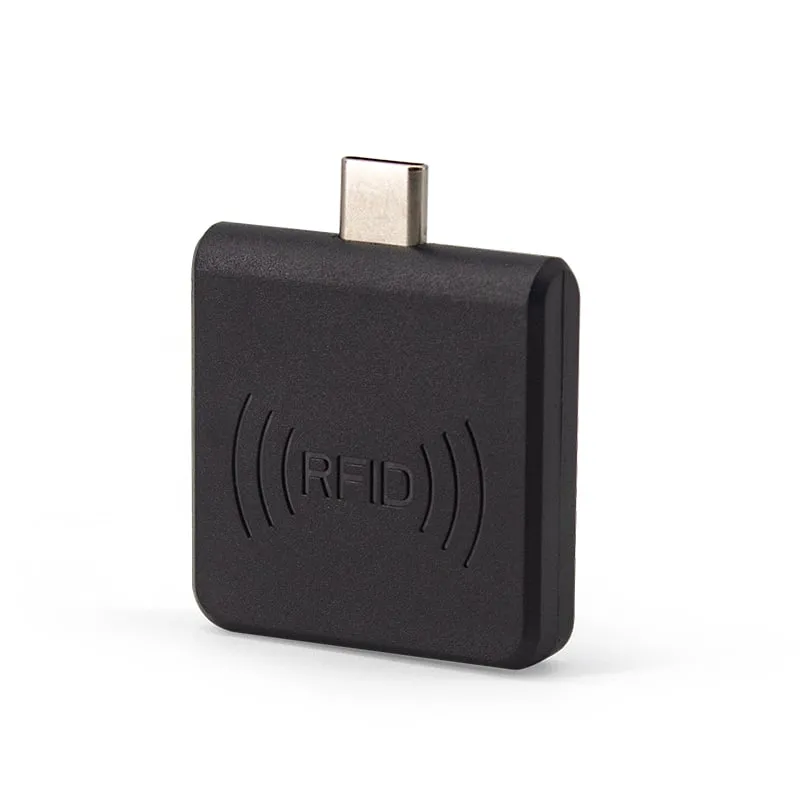
- The A220-C USB-C microchip reader for Android types a 10-digit decimal (4 bytes) by default. That cannot carry a full ISO ID, so if you need the 15-digit number, ask for a custom output format; the format is confirmed in your quotation.
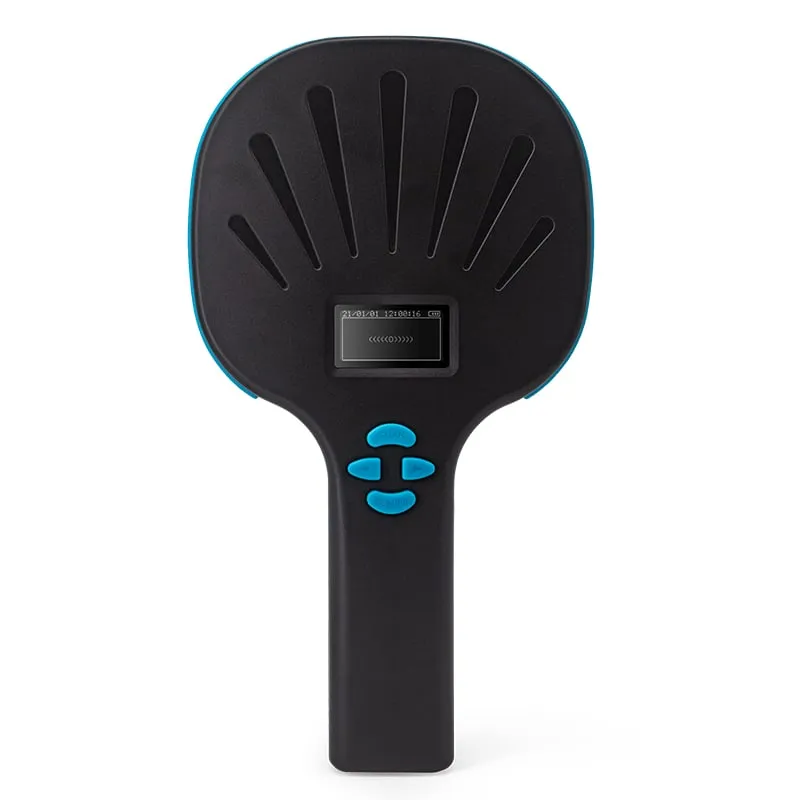
- The handhelds show the ID on their OLED. The A520-M and A540-M upload reads live or from memory, and the A530-U uploads stored records over USB. The A660-M 134.2kHz EID panel reader sends the ID over RS232 or RS485. For all of them, the upload or serial format is confirmed in your quotation.
All of them read ISO FDX-B tags and 125kHz EMID tags, and none of them writes tags. EMID tags do not follow ISO 11784 and have no country code, so they come out as a shorter number. If you handle both, your database has to accept both lengths.
Checklist: getting ISO animal IDs into your system
- Store the ID as text, 15 characters for an ISO ID, not as a number. Number fields drop the leading zero of codes such as 036, and spreadsheets show long numbers as 2.76E+14. The Excel guide covers setting a column to text.
- Choose one display format (with or without a space after the first three digits) and strip separators before comparing IDs.
- Classify the first three digits on import: country code, shared code 900, other manufacturer code, or 999 test tag. Reject 999 in production records.
- Decide whether you need the flags. If retagging or species information matters, confirm the reader can output the full 64-bit code; most readers show only the 15 digits.
- Confirm the protocol. Make sure the reader supports FDX-B, HDX or both, to match your tags.
- Plan for non-ISO tags. EMID and older 125kHz formats give shorter numbers or no read at all on an ISO-only reader.
- Get a sample output string from the reader before you write import code, and test it with tags from your own supply.
- Ask about certification if a tender requires it. Do not assume a reader is ICAR-tested unless you receive the test certificate.
To check a reader against your software, order samples or send your tag type and the string your system expects with your inquiry. We will confirm the output format in your quotation.
Frequently asked questions
What is the difference between ISO 11784 and ISO 11785?
ISO 11784 defines what the ID is: a 64-bit code with flags, a country or manufacturer code and a national ID. ISO 11785 defines how the ID travels: a 134.2kHz reader field and two tag protocols, FDX-B and HDX. A tag and reader need both to work together.
Why does my pet's microchip number start with 9?
Codes from 900 to 998 are manufacturer codes, allocated by ICAR as the ISO registration authority. Many pet microchips use one in place of a country code. Code 900 is shared by several manufacturers, each with its own reserved block of numbers. A number that starts with 999 comes from a test transponder.
Can I store a 15-digit animal ID as a number in Excel or a database?
Store it as text. Country codes such as 036 start with a zero, which a number field drops, and spreadsheets show long numbers in scientific notation, such as 2.76E+14. A 15-character text field keeps every digit exactly as the reader sent it.
Is a 9- or 10-digit microchip number ISO 11784?
No. An ISO 11784 ID is shown as 15 digits. Shorter numbers usually come from older 125kHz formats, or from EMID tags that follow the EM4100 code. A reader set to a short output format can also shorten an ISO ID, so check the reader's output setting first.
Do your readers output the full 15-digit number?
It depends on the model and your order. The A220-C types a 10-digit decimal by default, with custom formats on request. For the A110-U and A140-U, the handhelds and the A660-M panel, the output string is confirmed in your quotation. Tell us you need the full 15-digit ID.
Readers mentioned in this guide
 134.2kHz
  134.2kHz
  134.2kHz
 A540-M
134.2kHz FDX-B Animal Tag Reader with 1D/2D Barcode Scanner
- USB
- Wireless
- Handheld
Read range: > 15 cm
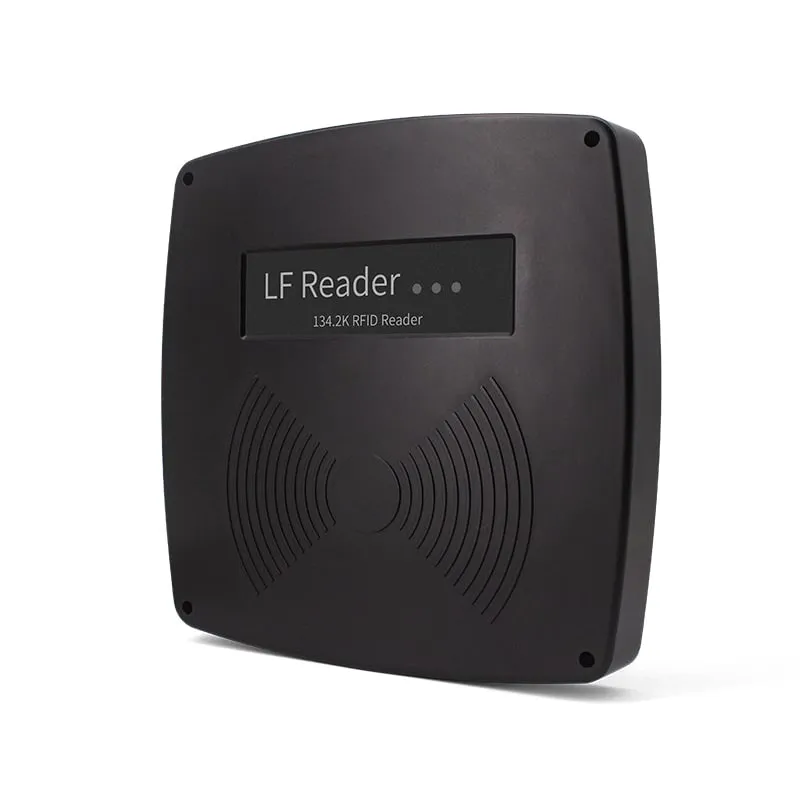 134.2kHz
 A660-M
Long-Range 134.2kHz FDX-B Panel Reader, RS232 / RS485
- RS232
- RS485
- Fixed / long-range
Read range: 40 cm ± 5 cm