UHF RFID
UHF RFID Frequency by Country: Bands, Power Limits and Ordering Tips
By Henrium · · 9 min read
Quick answer
UHF RFID has no single worldwide band. The US, Canada and Mexico use 902–928 MHz at 4 W EIRP; the EU and UK use 865.6–867.6 MHz at 2 W ERP; India uses 865–867 MHz; China 920.5–924.5 MHz; Japan 916.7–920.9 MHz. EPC Gen2 tags work in all of them, but each reader must be supplied for the country where it operates.
There is no single worldwide UHF RFID band. Passive EPC Gen2 tags respond anywhere from 860 to 960 MHz, but each country lets readers transmit in only part of that range, at its own power limit and with its own channel rules. A reader supplied for the wrong band may be illegal to operate, and it can also read poorly with tags tuned for the local band.
This guide lists the allocations for the main markets, explains the power units (ERP and EIRP), and ends with a checklist for ordering readers for a project abroad. The table summarizes the GS1 Overview of UHF frequency allocations for RAIN RFID, dated 29 September 2025, which is published on gs1.org. GS1 describes it as unofficial and national rules change, so confirm with the regulator before you deploy.
The short answer
- Two main families. 902–928 MHz at 4 W EIRP in the US, Canada, Mexico and much of Latin America. 865–868 MHz in Europe, many countries in the Middle East and Africa, and India.
- Much of East and Southeast Asia uses narrower bands between 916 and 925 MHz: China 920.5–924.5 MHz, Japan 916.7–920.9 MHz, South Korea 917–920.8 MHz, Singapore and Thailand 920–925 MHz.
- Tags are not tied to a country. EPC Gen2 (ISO/IEC 18000-63) chips work across the whole range, although tag antennas are tuned. Readers are the part that must match the country.
- Order by the country of installation, not the country you ship from or where your distributor sits.
UHF RFID bands by country
| Country or region | Band (MHz) | Power limit | Notes |
|---|---|---|---|
| United States, Canada, Mexico | 902–928 | 4 W EIRP | Frequency hopping |
| Argentina, Costa Rica, Dominican Republic, Panama, Uruguay | 902–928 | 4 W EIRP | Frequency hopping |
| Brazil | 902–907.5 and 915–928 | 4 W EIRP | Frequency hopping |
| Colombia, Peru | 915–928 | 4 W EIRP | Frequency hopping |
| Venezuela | 922–928 | 4 W EIRP | Previously 908–928 |
| Chile | 913–919 and 925–928; 915–928 | 1 W EIRP; 0.5 W EIRP | Lower limits than most of the Americas |
| EU member states, UK, Norway, Switzerland, Türkiye | 865.6–867.6 | 2 W ERP | Four channels under ETSI EN 302 208; many also allow 4 W ERP at 916.3, 917.5 and 918.7 MHz |
| Saudi Arabia, UAE, Oman, Nigeria, Tunisia | 865.6–867.6 | 2 W ERP | ETSI-based |
| South Africa | 865.6–867.6; 916.1–920.1 | 2 W ERP; 4 W ERP | |
| Morocco | 865.6–865.8; 867.6–868.0 | 2 W ERP; 0.5 W ERP | 2 W only in the channel centered at 865.7 MHz |
| Iran, Jordan | 865–868 | 2 W ERP | |
| Russia | 866.0–867.6; 866–868; 915–921 | Up to 2 W ERP; 0.5 W ERP; 1 W ERP | License conditions apply |
| India | 865–867 | 4 W ERP | |
| Israel | 915–917 | 2 W EIRP | |
| China (mainland) | 920.5–924.5 | 2 W ERP | Frequency hopping |
| Hong Kong | 865–868; 920–925 | 2 W ERP; 4 W EIRP | |
| Japan | 916.7–920.9; 916.7–923.5 | 4 W EIRP (licensed); 0.5 W EIRP (license-free) | License-free readers use listen-before-talk |
| South Korea | 917–920.8 | 4 W EIRP | Frequency hopping or listen-before-talk; 917–923.5 MHz at 0.2 W EIRP |
| Taiwan | 922–928 | 1 W ERP indoor; 0.5 W ERP outdoor | Frequency hopping |
| Singapore | 920–925; 866–869 | 2 W ERP; 0.5 W ERP | |
| Malaysia | 919–923 | 2 W ERP | Up to 4 W with an apparatus assignment |
| Thailand | 920–925 | 4 W EIRP | License required above 0.5 W |
| Indonesia | 923–925 | 2 W ERP | |
| Vietnam | 866–868; 918–923 | 0.5 W ERP | 920–923 MHz at 2 W ERP only for licensed toll and traffic systems |
| Bangladesh | 925–927 | Not listed | |
| Australia | 920–926; 918–926 | 4 W EIRP; 1 W EIRP | |
| New Zealand | 864–868; 920–928 | 6 W EIRP on 864–868 | Frequency hopping; check the 920–928 MHz limit with the regulator |
Several countries, among them Pakistan, the Philippines, Egypt and Kenya, are not in the GS1 overview. For those, check with the national regulator, or name the country in your RFQ and the band is confirmed in your quotation.
ERP vs EIRP: comparing the power limits
Regulators state limits in two units. EIRP compares the reader’s radiated power with an ideal isotropic antenna; ERP compares it with a half-wave dipole, which has 2.15 dB of gain. To compare limits, convert everything to EIRP:
| Limit | EIRP | Where it applies (examples) |
|---|---|---|
| 0.5 W EIRP | 27.0 dBm, 0.5 W | Japan, license-free |
| 2 W ERP | 35.2 dBm, 3.3 W | EU and UK main band, China, Singapore, Malaysia, Indonesia |
| 4 W EIRP | 36.0 dBm, 4 W | US, Canada, Mexico, Brazil, Australia, Thailand, South Korea, Japan (licensed) |
| 4 W ERP | 38.2 dBm, 6.6 W | India; EU upper-band channels and South Africa’s upper band, where allowed |
The difference between 2 W ERP and 4 W EIRP is under 1 dB, worth only about 10% of free-space read range. India’s 4 W ERP sits about 2 dB above the US limit. So in most markets the band matters far more for legality and tag tuning than for range. Every limit applies to radiated power, which includes antenna gain: a reader running 30 dBm into a 12 dBi antenna, such as the U650-M 12 dBi long-range UHF reader at full power, radiates 42 dBm EIRP, well above all of these limits. The UHF read range guide shows how to set conducted power for each antenna gain.
Channels, hopping and listen-before-talk
United States. Under FCC Part 15.247, a reader transmitting at the full 1 W must hop across at least 50 channels in 902–928 MHz (commonly spaced 500 kHz apart) and may not occupy any one channel for more than 0.4 s in a 20 s period. The 4 W EIRP ceiling comes from 1 W conducted into an antenna of up to 6 dBi; with more gain, conducted power drops dB for dB.
Europe. ETSI EN 302 208 gives the main band four high-power channels, centered at 865.7, 866.3, 866.9 and 867.5 MHz, each up to 200 kHz wide, at 2 W ERP. With only four channels, sites with many readers plan channel assignments and read timing. In countries that implement Commission Implementing Decision (EU) 2018/1538 as amended, readers may also use 4 W ERP at 916.3, 917.5 and 918.7 MHz. Some countries require upper-band installations to be declared or approved, for example France and Greece.
Asia-Pacific. China uses frequency hopping in 920.5–924.5 MHz. Japan requires a license for readers up to 4 W EIRP, while low-power readers are license-free with listen-before-talk. South Korea allows hopping or listen-before-talk. Thailand requires a license above 0.5 W, and Malaysia an apparatus assignment above 2 W ERP.
On our desktop reader/writers and some of the integrated models, frequency hopping or a fixed frequency is selected in software.
Are UHF tags tied to a country?
The chip is not. EPC Gen2 tag chips respond anywhere from 860 to 960 MHz, so a tag bought in one region is read by a reader in another. The radio rules in this guide govern what the reader transmits.
The tag antenna is a different matter. Inlays are tuned, and a tag optimized for one band can read noticeably shorter in the other. Tags sold as “global” give up a little peak performance to cover both. In practice:
- For a project that spans the US and Europe, specify global tags.
- For windshield, on-metal and other special tags, check which band the datasheet is tuned for.
- Test the tag with a reader set to the destination band before you order in volume.
What the band means when you order a reader
The band is not only a software setting. On many readers, the RF filters and the built-in antenna are matched to a band, and the firmware holds the channel plan and power limit. A reader sold as “902–928 MHz” is also not automatically correct for every country inside that range: Australia uses 920–926 MHz, Brazil 902–907.5 and 915–928 MHz, and Colombia and Peru 915–928 MHz, so the channel plan has to be restricted. A label reading “860–960 MHz” usually describes the chip or module, not the approved band of the finished reader.
Our UHF readers are supplied per band:
| Reader line | Standard bands | Other bands |
|---|---|---|
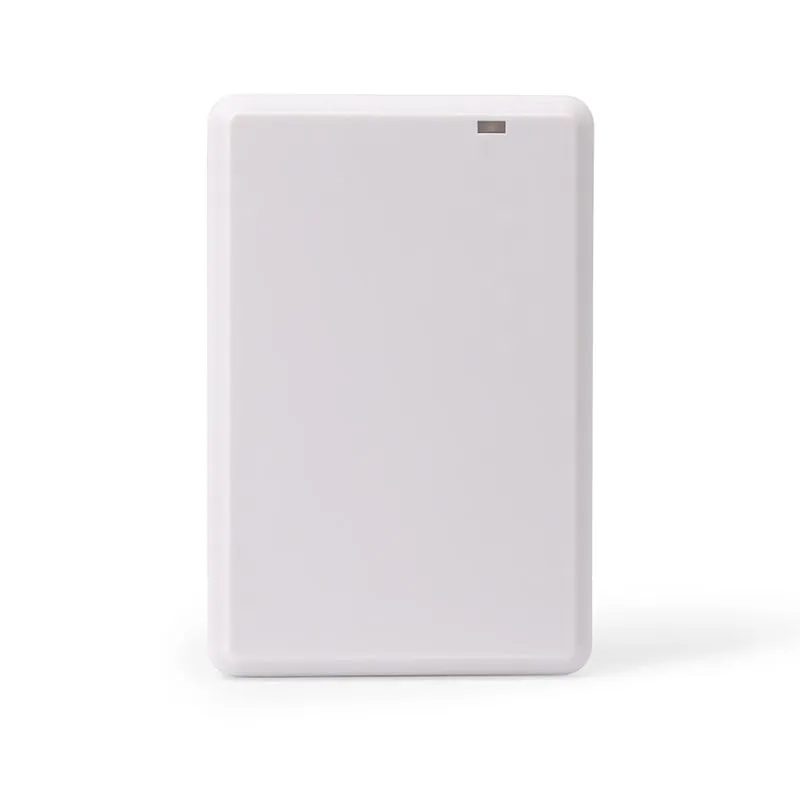
| USB desktop reader/writers: U120-U, U130-U, U140-U, U160-U | 902–928 MHz (US band) or 920–925 MHz (China band) | Other regional bands on request |
| Integrated long-range readers: U610-M to U650-M, and the -N builds | 902–928 MHz or 865–868 MHz | Other bands customizable |
| U540-M UHF and barcode handheld | 902–928 MHz | Customizable |
| U510-B, U520-M and U550-M handheld UHF RFID readers | 915 MHz | Ask before you order |
| U220-C USB-C UHF reader for Android | 902–928 MHz | Ask before you order |
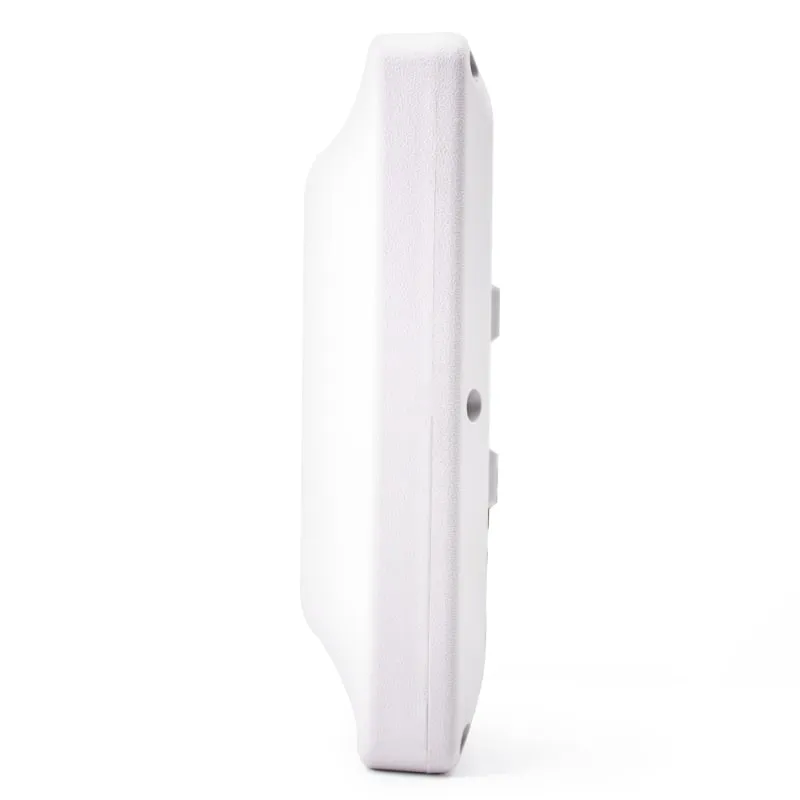
For a site on 865–868 MHz, the integrated readers such as the U610-M 7 dBi integrated UHF reader come in that band as standard. For desktop and handheld units, confirm availability in your band before you plan the project. Upper-band operation at 916–919 MHz is not listed in our current specifications.
The band is one requirement; radio type approval is another. Our current product specifications do not list certifications, so if your market or tender needs a specific approval, state it in your RFQ and it is confirmed in your quotation.
Common ordering mistakes
- Ordering by the shipping address. A distributor in one country buying for a project in another needs the project country’s band.
- Reading “860–960 MHz” as “works anywhere”. That figure usually describes the chip, not the band the reader is approved and set for.
- Mixing bands on one site. An enrollment desk on 920–925 MHz and gate readers on 865–868 MHz will both read EPC Gen2 tags, but each reader has to be legal where it operates, and region-tuned tags favor one band.
- Running a high-gain reader at full power. 30 dBm into a 12 dBi antenna is about 15.8 W EIRP.
- Forgetting handhelds and spares. Every UHF device in the project, including handhelds and replacement units, needs the same country band.
RFQ checklist: ordering the right band
- Country of installation for every site. List each one if the project spans countries.
- For EU and UK sites, whether the main 865.6–867.6 MHz band is enough. It is the usual choice, and the 865–868 MHz version of our integrated readers covers it.
- Indoor or outdoor use. Some limits depend on it: Taiwan allows 1 W ERP indoors but 0.5 W ERP outdoors.
- Reader type and antenna gain, so RF power can be set within the local limit.
- Readers within range of each other, for channel planning, especially where only four channels exist.
- Tag model or a sample, so the tag’s tuned band can be checked against the reader.
- Any radio approval your market or tender requires.
Send these with your inquiry through the contact page, and the band and configuration are confirmed in your quotation. To test readers with your own tags first, see samples. For choosing the reader type itself, read fixed vs integrated vs handheld UHF readers, and browse every model on the UHF RFID readers page.
Frequently asked questions
Can I use a 915 MHz UHF RFID reader in Europe?
Not in the main European band. EU and UK rules allow UHF RFID readers in 865.6–867.6 MHz at 2 W ERP, and a reader that hops across 902–928 MHz transmits on frequencies Europe does not allow for RFID. Some European countries also permit 4 W ERP on 916.3, 917.5 and 918.7 MHz, but only for readers built for those channels. For European sites, order the 865–868 MHz version of our integrated readers.
Do UHF RFID tags work in every country?
Yes. EPC Gen2 tag chips respond anywhere in 860–960 MHz, and the radio rules govern what the reader transmits. Tag antennas are tuned, though, so a tag optimized for 902–928 MHz may read noticeably shorter with an 865–868 MHz reader. Choose global tags for projects that span regions, and test them with a reader set to the destination band.
What UHF RFID frequency is used in India?
India allows UHF RFID in 865–867 MHz at up to 4 W ERP. That range sits inside the 865–868 MHz version of our integrated readers, but a reader set to the European channel plan transmits up to 867.6 MHz, so for India the channels must stay within 865–867 MHz. Tell us the site is in India, and the band configuration is confirmed in your quotation.
What UHF RFID band does China use?
China uses 920.5–924.5 MHz at 2 W ERP with frequency hopping. Our USB desktop reader/writers are offered in a 920–925 MHz China band version as well as 902–928 MHz. For the integrated readers, other bands are customizable, so confirm the China band in your quotation.
What is the difference between ERP and EIRP?
Both describe the power radiated in the strongest direction. EIRP is referenced to an ideal isotropic antenna and ERP to a half-wave dipole, which has 2.15 dB of gain, so EIRP = ERP + 2.15 dB. The European limit of 2 W ERP is about 3.3 W EIRP, slightly below the US limit of 4 W EIRP.
Readers mentioned in this guide
 UHF
UHF U610-M+1 variant
UHF Integrated RFID Reader, 7 dBi, 0–5 m, Wiegand/RS485/USB
- USB
- RS232
- RS485
- Fixed / long-range
Read range: 0–5 m
 UHF
UHF 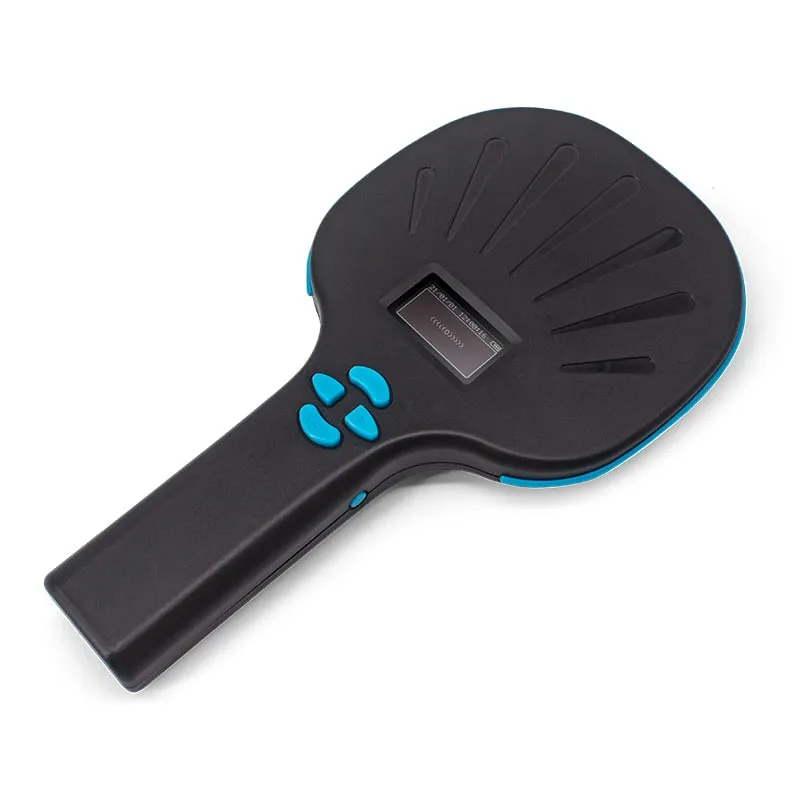 UHF
UHF 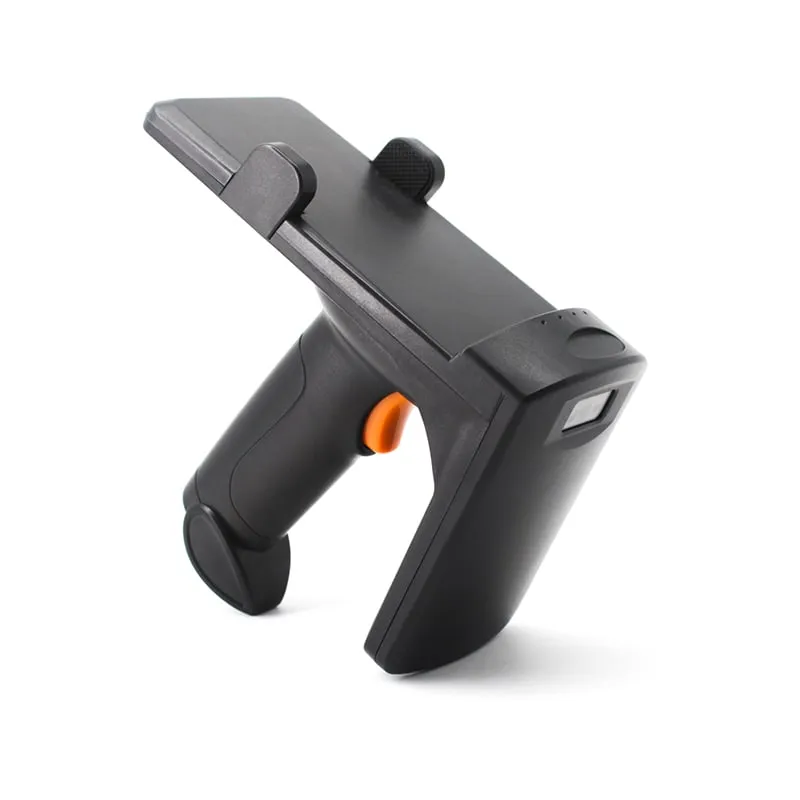 UHF
UHF U550-M
Bluetooth UHF RFID Pistol-Grip Reader with Phone Holder
- USB
- Wireless
- Handheld
Read range: 0–3 m