 13.56MHz
 H150-U
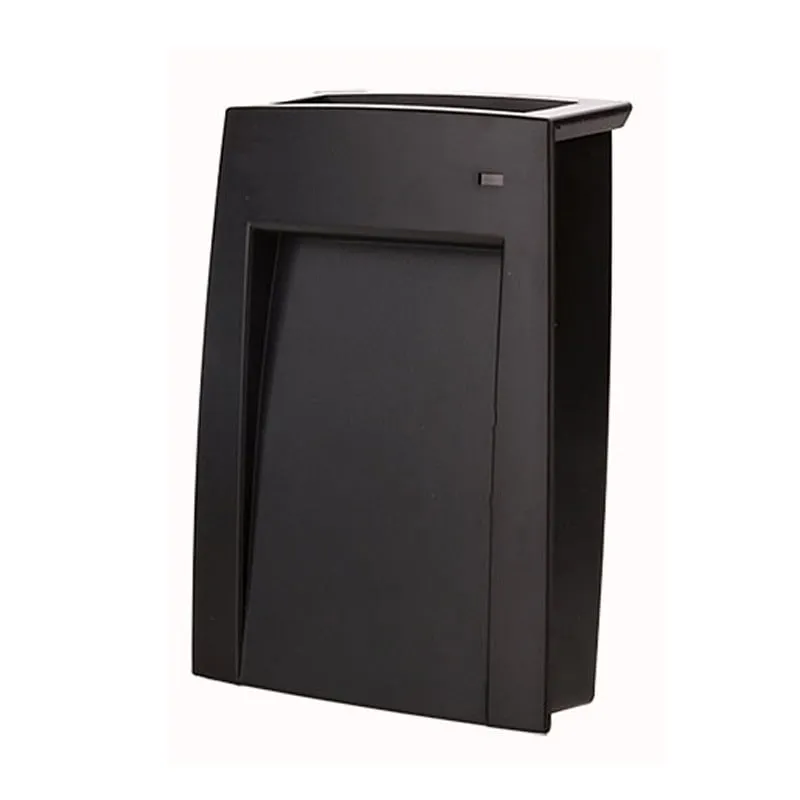
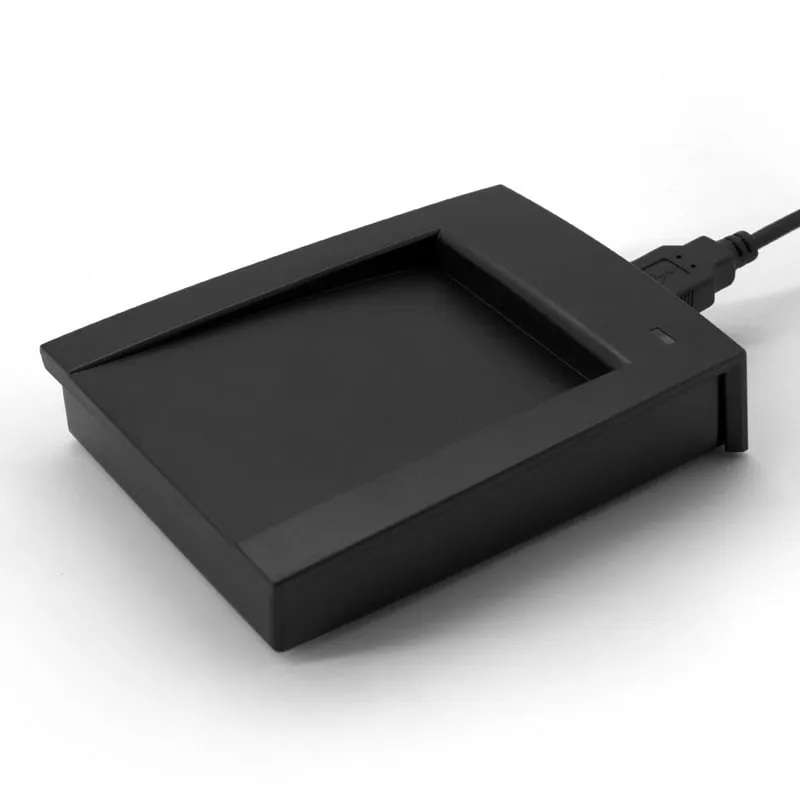
13.56MHz USB MIFARE Reader, Angled Desktop with Card Recess
- USB
- RS232
- Desktop
Read range: Up to 80 mm
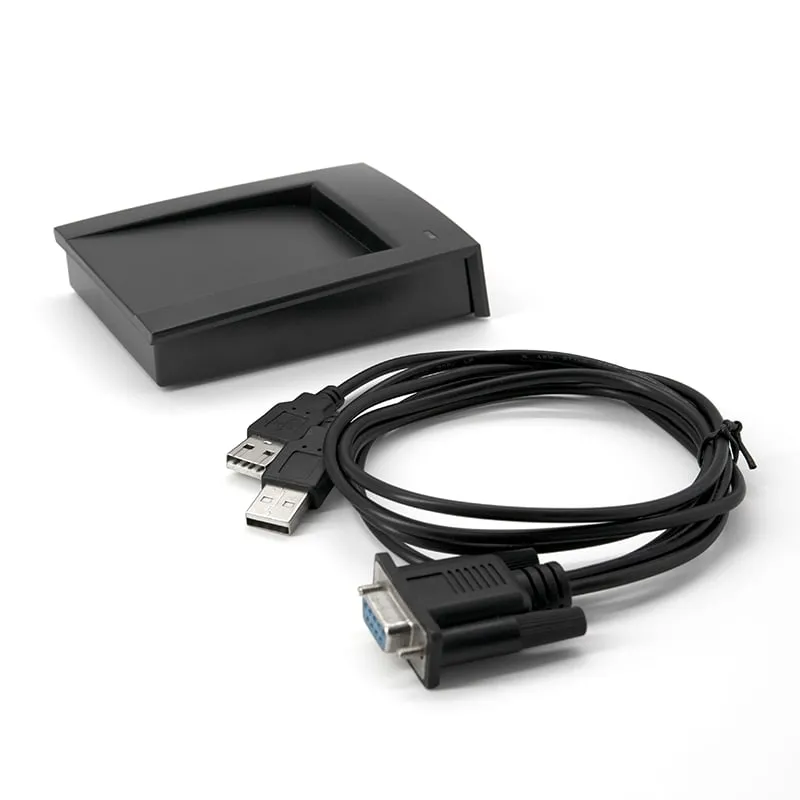
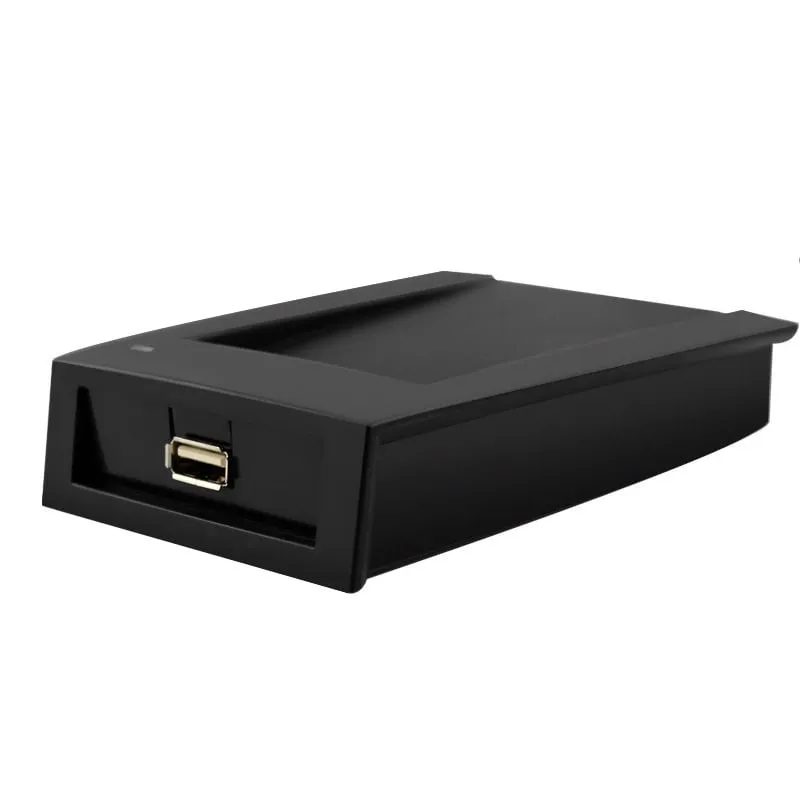
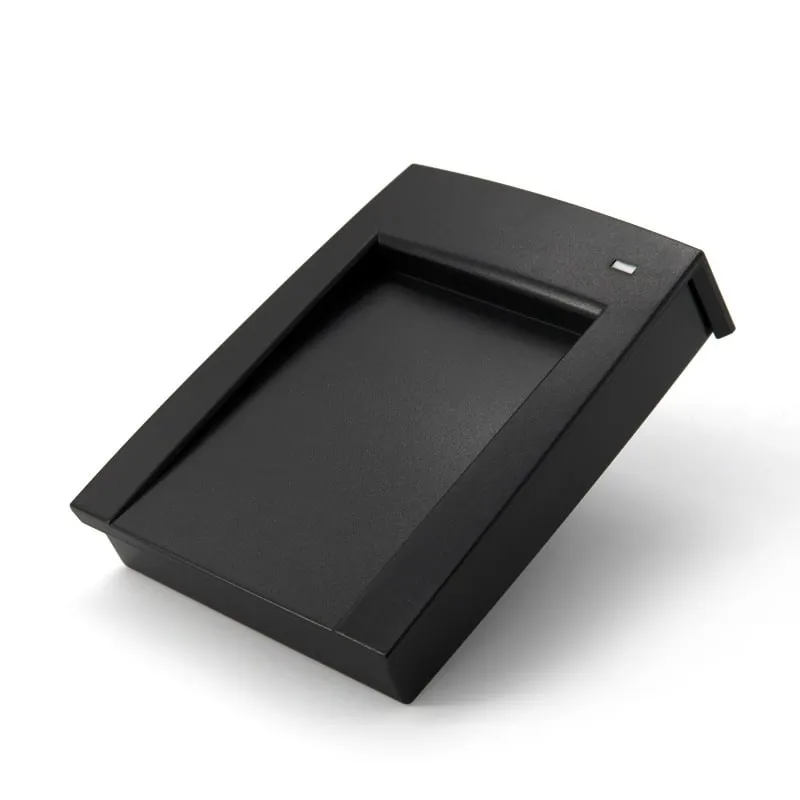
The H150-R is a read-only 13.56MHz RS232 reader in the angled classic desktop housing with a card recess. It reads MIFARE Classic 1K/4K, NTAG203 and NTAG213 UIDs at up to 80 mm and sends them over a DB9 serial connection at 9600 bps, 8-N-1, with a documented STX/ETX frame for parsing.
The H150-R is meant for fixed stations whose software listens on a COM port: self-service kiosks, industrial terminals, legacy attendance and POS PCs, and controllers with a serial input. The application receives each read in the background, so a card is captured even when no window has the focus.
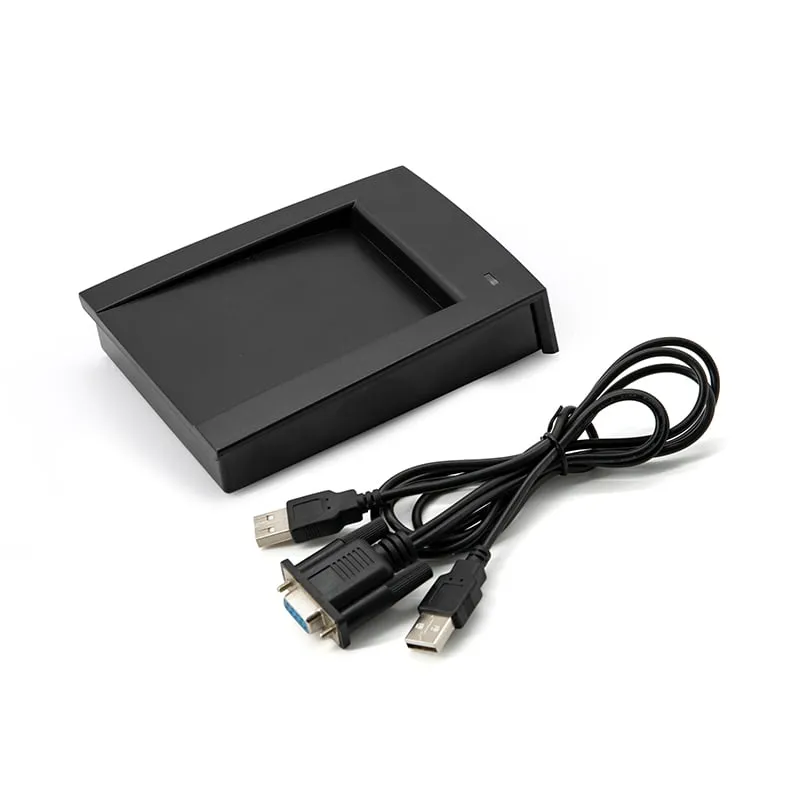
The card recess suits stations where the card stays on the reader while a transaction or registration completes. Its supplied cable ends in a DB9 connector for data and a USB-A plug for power, so a PC with a COM port can supply both without a separate power adapter.
To check a sample before writing any code, open the port in a serial terminal at 9600 bps, switch the view to hex and present a card. With framed output, every read starts with 02 and ends with 03; with plain output you see the 10-digit card number.
Besides the default 10-digit decimal card number, the H150-R documents a framed message for software that needs to validate every read:
| Field | Content |
|---|---|
| STX | 0x02, start of frame |
| Len | Length byte |
| Card type | Identifies the card type |
| Serial number | 5 bytes |
| BCC | Block check character (checksum) |
| ETX | 0x03, end of frame |
Parse from STX to ETX instead of relying on timing, and discard frames whose BCC does not match. The 125kHz L150-R in the same housing also frames its data between STX (0x02) and ETX (0x03); check its field layout before sharing parser code. Which output your units ship with, plain or framed, is confirmed in the quotation.
| Model | H150-R |
|---|---|
| Frequency | 13.56 MHz |
| Form factor | Angled desktop reader with card recess |
| Housing | ABS |
| Color | Black |
| Standard | ISO/IEC 14443A (UID read only) |
|---|---|
| Supported cards | MIFARE Classic 1K (S50), MIFARE Classic 4K (S70), NTAG203, NTAG213, other ISO 14443A cards (UID) |
| Read range | Up to 80 mm (depends on card and environment) |
| Read time | < 200 ms |
| Read interval | < 0.5 s |
| Interface | RS232, DB9 connector |
|---|---|
| Serial settings | 9600 bps, 8-N-1 (default); 19,200 or 115,200 bps selectable |
| Default output | 10-digit decimal card UID |
| Serial frame | STX (0x02), length, card type, serial number (5 bytes), BCC, ETX (0x03) |
| Custom output | Custom output format on request |
| Host systems | Windows XP, Vista, 7, 10; Linux |
| Dimensions | 110 × 80 × 26 mm |
|---|---|
| Weight | Approx. 175 g |
| Cable | DB9 serial connector + USB-A plug, 1450 mm |
| Power | 5 V DC, 100 mA |
| Indicators | Red and green LED, buzzer |
| Operating temperature | -10 °C to +70 °C |
| Storage temperature | -20 °C to +80 °C |
| Humidity | < 90 % RH |
Specifications of H150-R as supplied for the standard version. Read range depends on the card or tag, mounting surface and environment — we can test your own cards before you order.
Works with
Card not listed? Send us the card type or a photo and we will confirm compatibility before you buy.
Plug the DB9 connector into the host's COM port (or a USB-to-RS232 adapter) and the USB-A plug into a USB port for the 5 V supply.
Open the port at 9600 bps, 8 data bits, no parity, 1 stop bit.
Present a card in the recess; the LED and buzzer confirm the read and the card data arrives on the port.
With framed output, read from STX (0x02) to ETX (0x03), verify the BCC byte, then take the 5-byte serial number.
Power. The H150-R runs on 5 V DC at about 100 mA, which an RS232 port does not provide, so the USB-A plug takes 5 V from a USB port while card data travels on the DB9 connector.
Both are 13.56MHz RS232 readers with the same card list, 80 mm range and serial settings. The H150-R uses the angled 110 × 80 × 26 mm housing with a card recess and a DB9 + USB-A cable; the H110-R is a 10 mm slim pad.
Yes. 9600 bps is the default, and 19,200 or 115,200 bps can be selected. Tell us the rate your host needs and it is confirmed before shipment.
Yes, the UID of NTAG213 and NTAG203 tags, as well as MIFARE Classic 1K and 4K cards. It does not read NDEF records or write to tags.
13.56MHz H150-U
Read range: Up to 80 mm
 13.56MHz
 H110-R
Read range: Up to 80 mm
125kHz 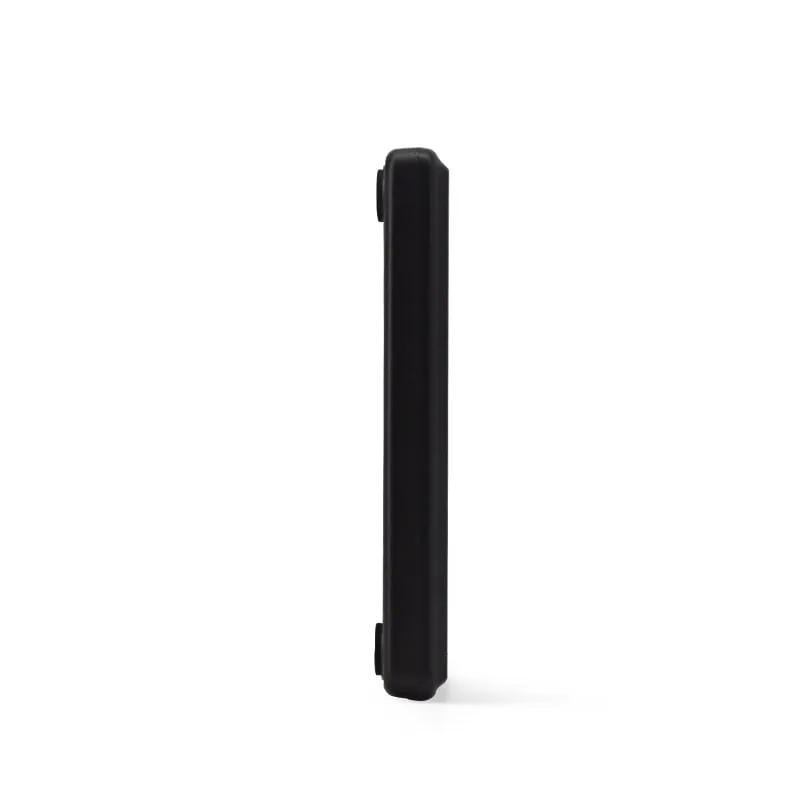 13.56MHz
 H110-U
Read range: Up to 80 mm
Tell us your card, interface and quantity
Send the card or tag type, the host system and your volume. We reply within 1 business day with a suggested model and sample options.