 125kHz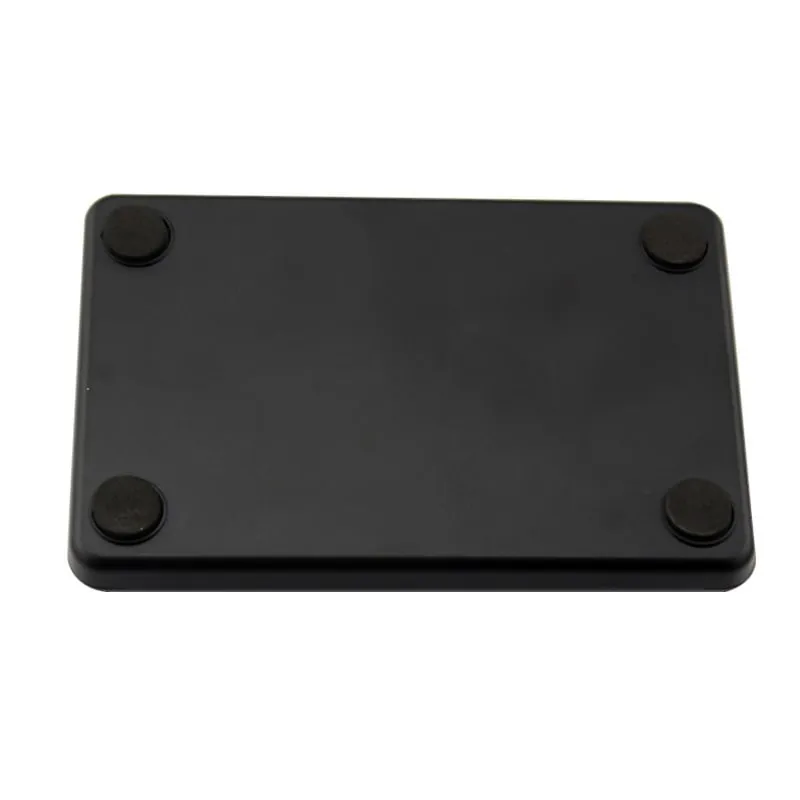
125kHz RFID Readers
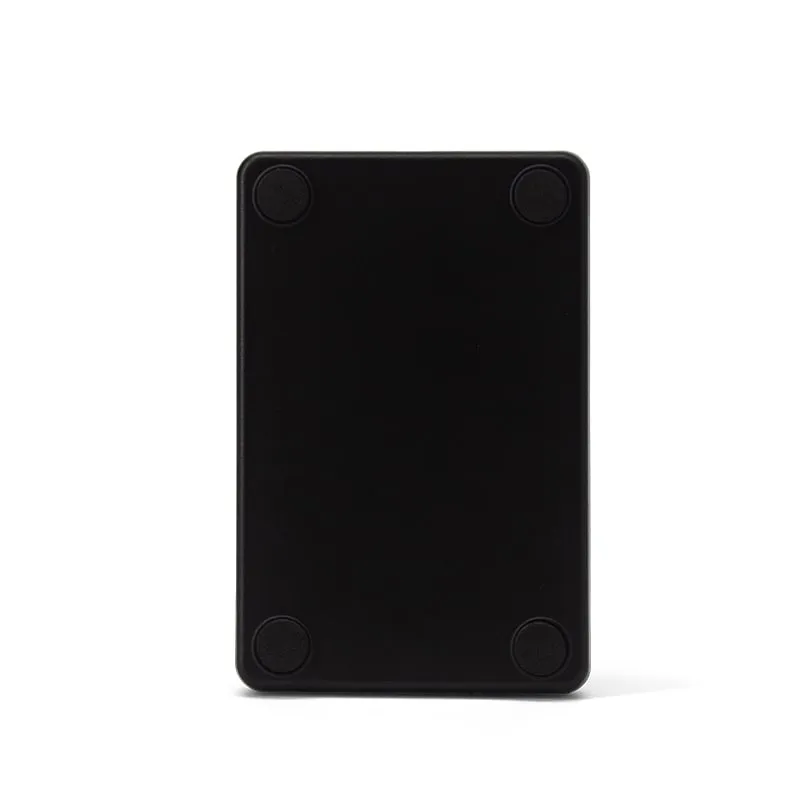
L110-R 125kHz RS232 RFID Card Reader, EM4100, Slim Pad
The L110-R is a slim 125 kHz card pad with an RS232 (DB9) interface, for kiosks, controllers and PCs that read card numbers from a serial port instead of a keyboard. It reads EM4100 and TK4100 cards and key fobs at up to 80 mm and sends a 10-digit decimal number at 9600 bps by default.
- Frequency
- 125 kHz
- Cards / tags
- EM4100, TK4100, SMC4001 and EM4100-compatible cards and key fobs
- Interface
- RS232, DB9 connector
- Output
- 10-digit decimal card number
- Read range
- Up to 80 mm (depends on card and environment)
- ✓ Sample units for evaluation
- ✓ Output format confirmed for your software
- ✓ Private label & OEM options
- ✓ Reply within 1 business day
Why integrators choose the L110-R
- 125 kHz IDs over serial — EM4100, TK4100 and SMC4001 card and fob IDs sent to a DB9 RS232 port.
- 9600 bps out of the box — 19200 and 115200 bps are selectable when the host needs them.
- STX … ETX frame — 0x02 marks the start and 0x03 the end of each read, so your parser can find message boundaries.
- Same numbers as the USB pad — the default 10-digit decimal output matches the L110-U, so USB and serial readers can share one card database.
- Slim 10 mm pad — approx. 104 × 68 × 10 mm and 155 g, with a 1450 mm cable.
- Read-only by design — it outputs the card ID only and never writes to the card.
Serial output for kiosks and controllers
Keyboard-emulation readers type into whatever window has focus. That is convenient at a desk but unreliable on a canteen terminal, a locker kiosk or an embedded controller, where a background process must receive the card number no matter what is on screen. The L110-R sends each read to a serial port that your application opens and listens to, so no text field or logged-in user is involved.
Many 125 kHz installations also run on older terminals and industrial PCs that still have a DB9 COM port and software that already reads serial data. The L110-R connects to that port directly. It needs a 5 V DC supply, and how that supply is provided at your host is confirmed in your quotation.
What your software receives
By default the L110-R runs at 9600 bps and sends the card ID as a 10-digit decimal number, framed by STX (0x02) at the start and ETX (0x03) at the end. 19200 and 115200 bps are selectable when your host needs them. Open the COM port in any serial terminal to see the raw output before you write your parser, and confirm the frame against a sample unit before you finalize the code.
With both readers on their default format, the card number matches what the L110-U types, so you can mix USB and serial readers on one card database. USB vs RS232 vs RS485 vs Wiegand covers the wiring and cable-length trade-offs.
Three 125 kHz serial housings
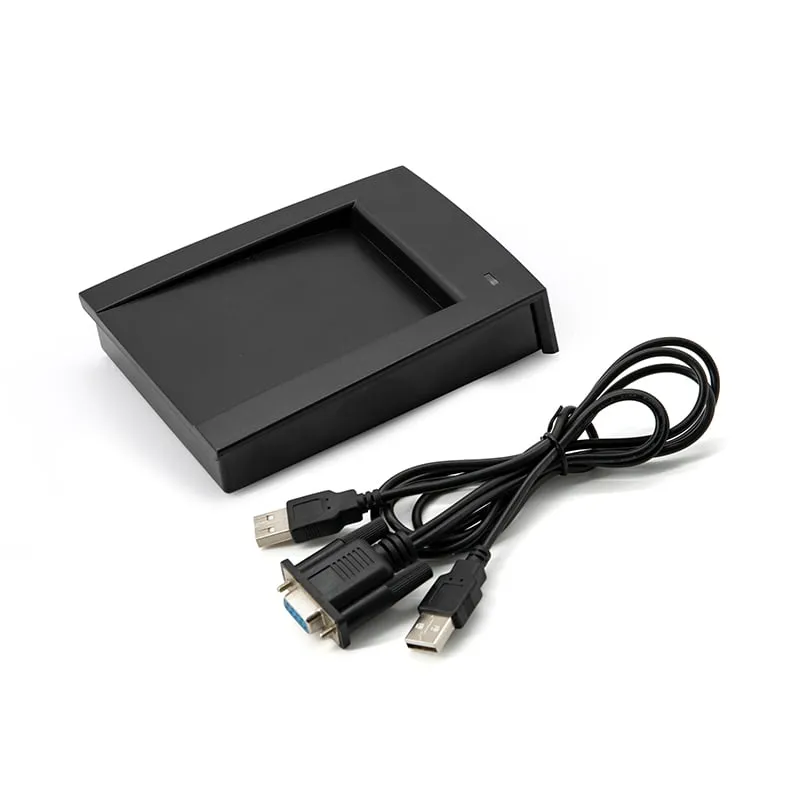
Our 125 kHz RS232 readers share the same card support and serial defaults; the housing is the difference. The L110-R and the L120-R are both 10 mm pads, slim and flat matte respectively. The L150-R is a 26 mm angled desktop reader with a card recess. All serial models are listed on the RS232 and RS485 readers page.
L110-R specifications
| Model | L110-R |
|---|---|
| Frequency | 125 kHz |
| Form factor | Slim desktop card pad with RS232 (DB9) cable |
| Housing | ABS |
| Color | Black |
| Supported cards | EM4100, TK4100, SMC4001 and EM4100-compatible cards and key fobs |
|---|---|
| Card operation | Read-only (card ID number) |
| Read range | Up to 80 mm (depends on card and environment) |
| Read time | < 200 ms |
| Read interval | < 0.5 s |
| Interface | RS232, DB9 connector |
|---|---|
| Baud rate | 9600 bps (default); 19200 / 115200 bps selectable |
| Default output | 10-digit decimal card number |
| Frame | Starts with STX (0x02), ends with ETX (0x03) |
| Output options | Custom output format on request |
| Host | PC or controller with an RS232 (DB9) serial port |
| Indicators | Red/green LED (red = standby, green = card read) and buzzer |
| Dimensions | Approx. 104 × 68 × 10 mm |
|---|---|
| Weight | Approx. 155 g |
| Cable length | 1450 mm |
| Power supply | 5 V DC |
| Operating temperature | -10 °C to +70 °C |
| Storage temperature | -20 °C to +80 °C |
| Humidity | < 90 % RH |
Specifications of L110-R as supplied for the standard version. Read range depends on the card or tag, mounting surface and environment — we can test your own cards before you order.
Card, tag and system compatibility
Works with
- ✓EM4100, TK4100 and SMC4001 125 kHz cards and key fobs
- ✓Windows or Linux hosts with an RS232 (DB9) COM port
- ✓Serial terminals and applications that read a COM port at 9600, 19200 or 115200 bps
Card not listed? Send us the card type or a photo and we will confirm compatibility before you buy.
Integration in 4 steps
- 1
Connect the DB9 plug to the host's RS232 port and supply 5 V DC; we confirm the power arrangement for your host with the quotation.
- 2
Open the COM port at 9600 bps (the default) in a serial terminal or in your application.
- 3
Present an EM4100 card or fob: the reader beeps, the LED turns green and one STX … ETX message arrives with the 10-digit card number.
- 4
Parse the data between STX (0x02) and ETX (0x03) and check the result against a few known cards before deployment.
OEM / ODM options for L110-R
- ◆Baud rate set to 9600, 19200 or 115200 bps before shipment on request
- ◆Card-number output format customized on request, for example hex instead of decimal
- ◆USB keyboard version in the same slim housing (L110-U)
- ◆13.56 MHz RS232 version for MIFARE cards (H110-R)
- ◆Private-label marking and packaging — scope confirmed in your quotation
Typical applications
L110-R FAQ
What baud rate does the L110-R use?
9600 bps by default. 19200 and 115200 bps are also selectable; tell us the rate your host uses and it can be set before shipment.
What does the L110-R serial output look like?
Each card read is sent as one message that starts with STX (0x02) and ends with ETX (0x03), carrying the card ID as a 10-digit decimal number by default. Check the frame on a sample unit with a serial terminal before you finalize your parser.
My PC has no COM port. Can I still use the L110-R?
A USB-to-RS232 adapter adds a COM port to most PCs; test the combination with a sample unit. If you do not need serial specifically, the USB keyboard version L110-U is simpler.
How far does the L110-R read?
Up to 80 mm, depending on the card or fob and the mounting surface. Metal directly behind the reader shortens the range.
Related readers
125kHz 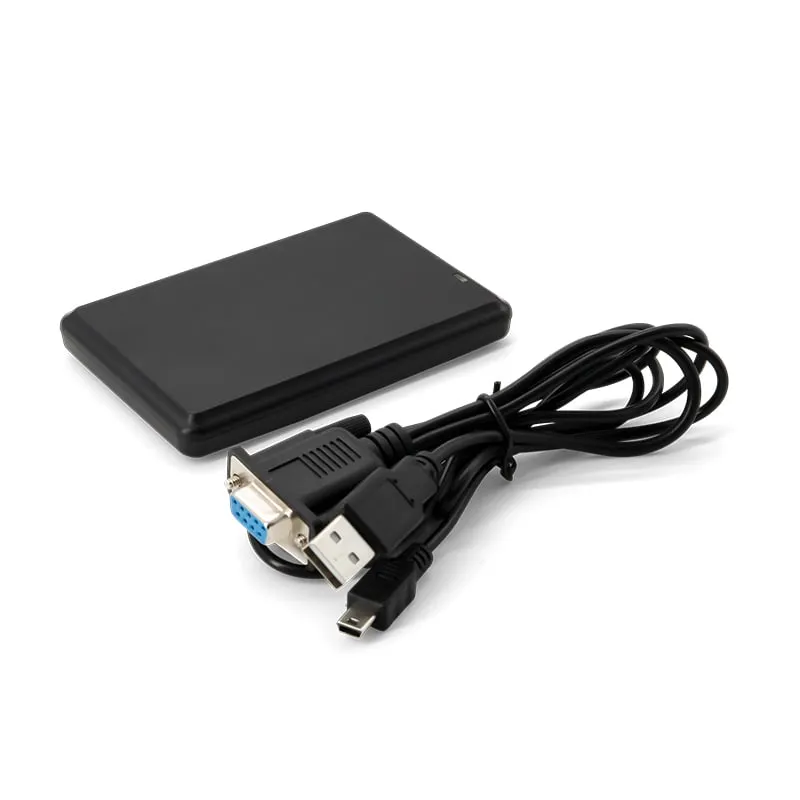 125kHz
  125kHz 13.56MHz
 H110-R
13.56MHz RS232 MIFARE Card Reader, Slim Pad, DB9 Serial
- RS232
- Desktop
Read range: Up to 80 mm
Tell us your card, interface and quantity
Send the card or tag type, the host system and your volume. We reply within 1 business day with a suggested model and sample options.